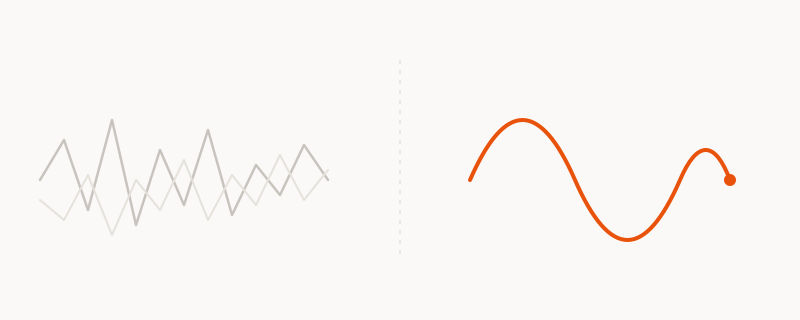
In March 2026, LinkedIn rolled out an update it internally calls the Authenticity Update. Its semantic filters can now recognize text that's an unedited prompt output — and actively throttle that content's reach. In the same window, Gartner published figures showing only 1 in 50 corporate AI investments deliver transformational value, and only 1 in 5 deliver any measurable return at all.
That's not two unrelated headlines that happened to land the same month. It's the same story told from two angles: the market got flooded with generic AI output, and the bill is now coming due. Whoever's LinkedIn posts visibly read as prompt-and-paste is losing reach. Whoever invested in AI without a clear strategy is losing budget. Companies that understand this first have the cheapest window to stand out they've had in five years — because most of their competitors are doing the exact opposite.
What exactly changed on LinkedIn
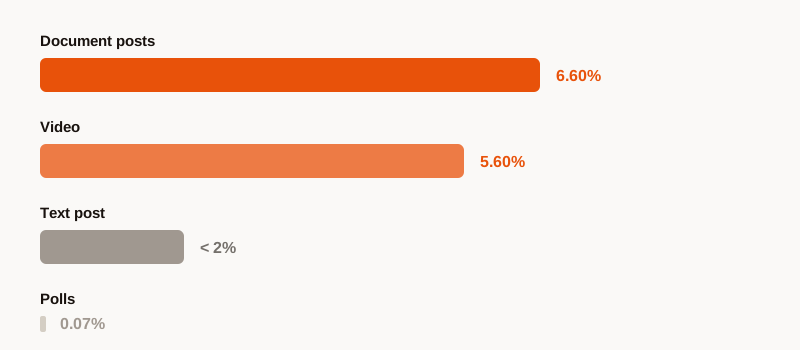
According to the Algorithm Insights report, LinkedIn-wide impressions are down 50% and engagement down 25% year over year. That sounds like bad news. But underneath that number is a redistribution, not a flat collapse — document posts (PDF carousels) average 6.60% engagement, video sits around 5.60%, while a plain text post struggles to clear 2%. Polls, once a favorite quick-engagement tool, dropped to a negligible 0.07% — LinkedIn has effectively stopped counting them as meaningful content.
The platform now also ties reach to whether your content matches your profile. If you write about a field that doesn't match your headline and experience, the algorithm doesn't trust it and limits who sees the post. In other words: in 2026, LinkedIn is actively checking whether you actually are who you claim to be.
How to tell your own writing still reads like generic AI output
This is a question worth asking regardless of whether you used AI — the answer isn't about whether you used it, it's about what's left in the final text. Three of the most common tells:
- The sentence would fit under anyone else's post in your field. Delete your name and company — if it still reads fine, it doesn't carry your experience, just a general truth about the industry.
- There's no specific number, named situation, or timeframe. "We improved the process" is generic. "We cut onboarding from 6 weeks to 9 days" isn't.
- The structure matches the last ten posts you scrolled past. Hook question, three bullets, motivational close — the algorithm knows that pattern as well as you do by now.
A reader spots the difference between generic advice and real experience in about three seconds — and LinkedIn's filter now does it in roughly the same amount of time.
A practical test before you publish: read the first two sentences out loud. If anyone in your field could have written them about any company, rewrite them so they're only true about you and this specific situation. That one step filters out most "AI slop" that the new filter is built to catch.
Why this isn't just an algorithm story
If this were only about one filter limiting reach, you could call it a temporary annoyance. But it lines up with a wider shift in business. Fast Company and Harvard Business Review have both independently described the same pattern this year: companies that bet on AI as a replacement for human judgment in 2025 are now discovering AI can speed up execution, but it doesn't replace trust, context, and relationship — and that's exactly where deals get decided today.
Put differently: the more the market generates generic content and generic decisions, the rarer — and more valuable — anything visibly and verifiably from one specific person becomes. LinkedIn's filter is just the technical symptom of something happening at a much larger scale: demand is shifting from volume of content to trustworthiness of the source.
What to actually do about it, as a CEO or founder
Here's the paradox most people miss: the more they worry their content will "sound like AI," the less they post at all — and silence on LinkedIn in 2026 hurts just as much as generic content does. The fix isn't to stop writing. It's to write less, but put your full name behind every word of it.
- Specific experience beats generic advice. "I learned that delegation fails when …" works. "5 tips for better delegation" with no context doesn't anymore.
- Use the format LinkedIn rewards in 2026. Document posts and short video get 3× the engagement of plain text — but they still need to carry your voice, not a template.
- Keep your profile aligned with what you post. The algorithm now checks consistency — your headline, about section, and post history need to tell one coherent story.
- Build a system, not sporadic inspiration. Consistency is the one variable no algorithm update can route around.
You can do all of this without AI too — it just takes a lot longer. The real distinction is whether you're using AI to speed up work no one else could do for you anyway (articulating your own experience, tightening a draft, finding the sharper word), or using it as a substitute for sitting down and actually deciding what you want to say in the first place.
What this looks like in numbers
One client we work with systematically on this went from essentially zero activity to 22,745 impressions and a reach of 7,501 people over 90 days — 54% of them outside his own follower network, meaning people who didn't know him before. It wasn't a viral hit or AI-generated content published in bursts. It was positioning and a system, published consistently month after month — exactly what today's algorithm rewards, and exactly what generic AI output can never replace.
Want to know if your profile passes the filter?
The audit checks your profile and content and shows exactly what still reads as generic versus what carries your own voice. A personalized PDF report within 24 hours.
Get my profile audited →LinkedIn didn't penalize AI in March 2026. It penalized impersonality. Which is exactly why your own, unmistakable voice is the single most valuable asset you have on the market right now — not as a nice motto, but because it's literally the one thing the filter can't imitate and no one can take from you.